


Technology
- Processing Techniques
- Analytical Equipment
- Processing Equipment
-

Wire Drawing
-

Heat Treatment
-

Surface Treatment
-

Stranding Process
-

Plating Process
-

Shaped Wire Drawing
-

Rolling Process
-

Precision Microfabrication
-

Fine Particle Shape Processing
-

Straightening Process
-

Assembly
-

Non-ferrous Wire Processing
-

Coiling Process
-

Ultra-Fine Wire Drawing
-

Ultra-Fine Stranding
-

Ultra-Fine Rolling
-

Advanced Surface Treatment
-

Tapering Process
-
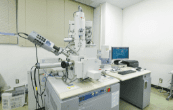
FE-SEM (Field Emission Scanning Electron Microscope)
-
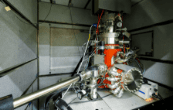
Auger Electron Spectrometers (AES)
-
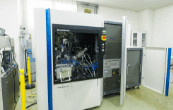
XPS(ESCA)
-
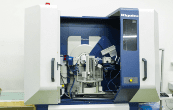
XRD
-
Inductively Coupled Plasma (ICP) Analysis
-
Gas Chromatography (GC)
-
Machining of precision mechanical components
-
Repair and fabrication of resin rollers and related components
-
Thermally Sprayed Products Manufacturing
-
Grinding and Repair of Wire Drawing Dies
-
Grindingand repair of shaped wire drawing dies
-
Precision Measuring Equipment


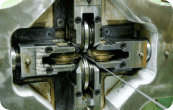
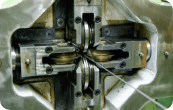



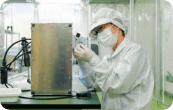
Assembly
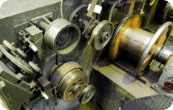
Wires and tubes are assembled using processes such as laser welding and crimping.

Non-ferrous Wire Processing
This includes wire drawing, heat treatment, and other processing of precious metals and non-ferrous metals.
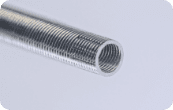
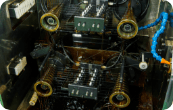

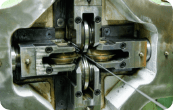


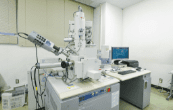
FE-SEM (Field Emission Scanning Electron Microscope)
An electron microscope that enables observation of fine surface structures at extremely high resolution.
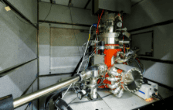
Auger Electron Spectrometers (AES)
An Auger electron spectrometer (AES) is an analytical instrument for qualitative and quantitative analysis of elements within several nanometers of a material surface. Depth profiling is possible using an etching function. Because an electron beam is used as the excitation source, AES is well suited for microscopic area analysis.
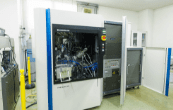
XPS(ESCA)
XPS (ESCA) is a surface analytical instrument for examining the elemental composition and chemical states of a material surface within a depth of a few nanometers. The analysis area is defined by the focused X‑ray beam.
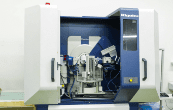
XRD
XRD is a non-destructive analytical instrument for analyzing the crystal structure and orientation of materials using X‑ray diffraction. The analysis depth ranges from a few to several tens of micro meters.
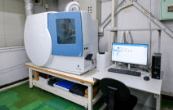
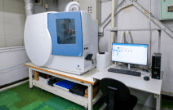
Inductively Coupled Plasma (ICP) Analysis
ICP is an emission spectroscopic analytical instrument in which samples are ionized using high‑temperature argon plasma.
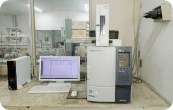
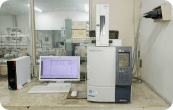
Gas Chromatography (GC)
GC is an analytical instrument that separates and quantifies volatile components carried by a carrier gas through a column.
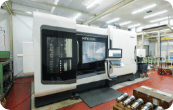
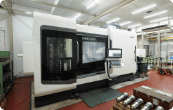
Machining of precision mechanical components
We machine components such as spindles and main rollers used in wafer slicing equipment.
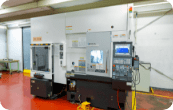
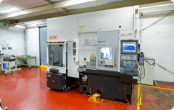
Repair and fabrication of resin rollers and related components
This equipment is used for machining main rollers and resin rollers for wafer slicing equipment and is capable of processing a wide variety of groove shapes and pitches to meet customer requirements.
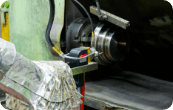
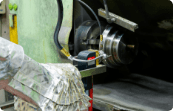
Thermally Sprayed Products Manufacturing
We manufacture rollers for wire rolling. The rollers must have sufficient strength to withstand the wire, and their outer surfaces are mirror‑finished to prevent damage to the wire.
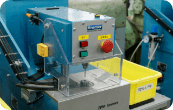
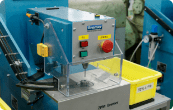
Grinding and Repair of Wire Drawing Dies
We manufacture wire drawing dies with fine holes processed in cemented carbide and diamond. In addition, mirror finishing of these fine holes is also available.
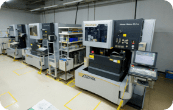
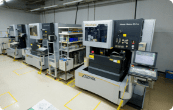
Grindingand repair of shaped wire drawing dies
We manufacture wire drawing dies with fine holes processed in cemented carbide and diamond. In addition, mirror finishing of these fine holes is also available.
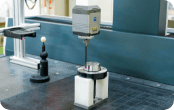
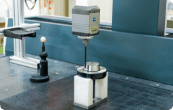
Precision Measuring Equipment
This equipment is used for measuring and evaluating the products. Depending on whether the measurement target is three‑dimensional shape evaluation (geometric tolerances) or cross‑sectional profile evaluation, different instruments are selected for measurement.